Find the water before you bury pipe
French drain installation in Columbia, Tennessee
Standing water, a soggy lawn, or runoff heading for the house. Serving Columbia and the rest of Maury County, starting with where the water actually comes from.
- Call any hour, seven days a week
- Free on-site assessment
- Grade checked before any drain is quoted
- Discharge planned, not left to chance
A french drain is a perforated pipe bedded in washed stone that intercepts water moving through the ground and carries it somewhere it can safely go. It is the right answer only once you know where the water is coming from, which is why the grade gets checked before anyone quotes pipe. Around Columbia and Maury County, clay subsoil sitting over limestone drains slowly and pushes water sideways rather than down, so a great deal of what shows up in a yard here never fell on it. Sometimes the fix is regrading and a downspout line for a few hundred dollars. Sometimes it is a drain along the whole uphill side.
Why the water has nowhere to go
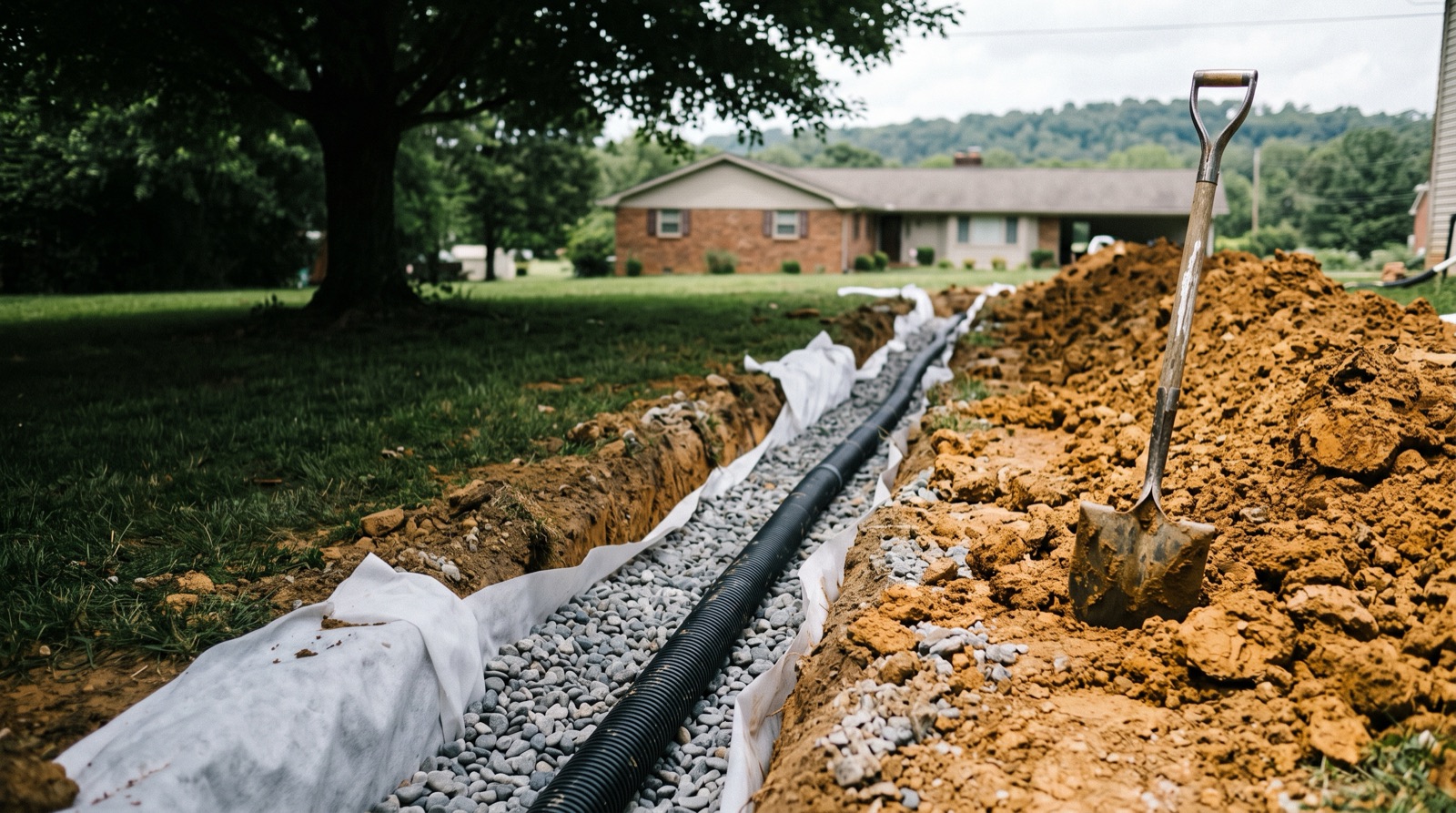
A french drain is a trench filled with washed stone around a perforated pipe, wrapped so that soil cannot migrate into the voids. It works by giving subsurface water an easier path than the clay around it. That is the whole principle, and it is why depth and slope decide whether one works: too shallow and the water passes underneath it, too flat and the pipe holds water instead of moving it.
The parts that get skipped are the parts that fail. Washed stone rather than crusher run, because fines clog the voids within a season. Filter fabric around the stone rather than wrapped tight around the pipe alone, because a sock filled with silt is a plugged drain. And a real outlet, either to daylight on falling ground or to a pop-up emitter, because a drain with nowhere to go simply fills up and stays full.
Drainage is priced by what has to move, not by the size of the house. The length of the run, how deep it has to sit, whether there is anywhere downhill to discharge, and what has to come up and go back afterwards are what decide the number. That is why an honest assessment starts by walking the ground and finding where the water comes from.
Signs your property has a drainage problem
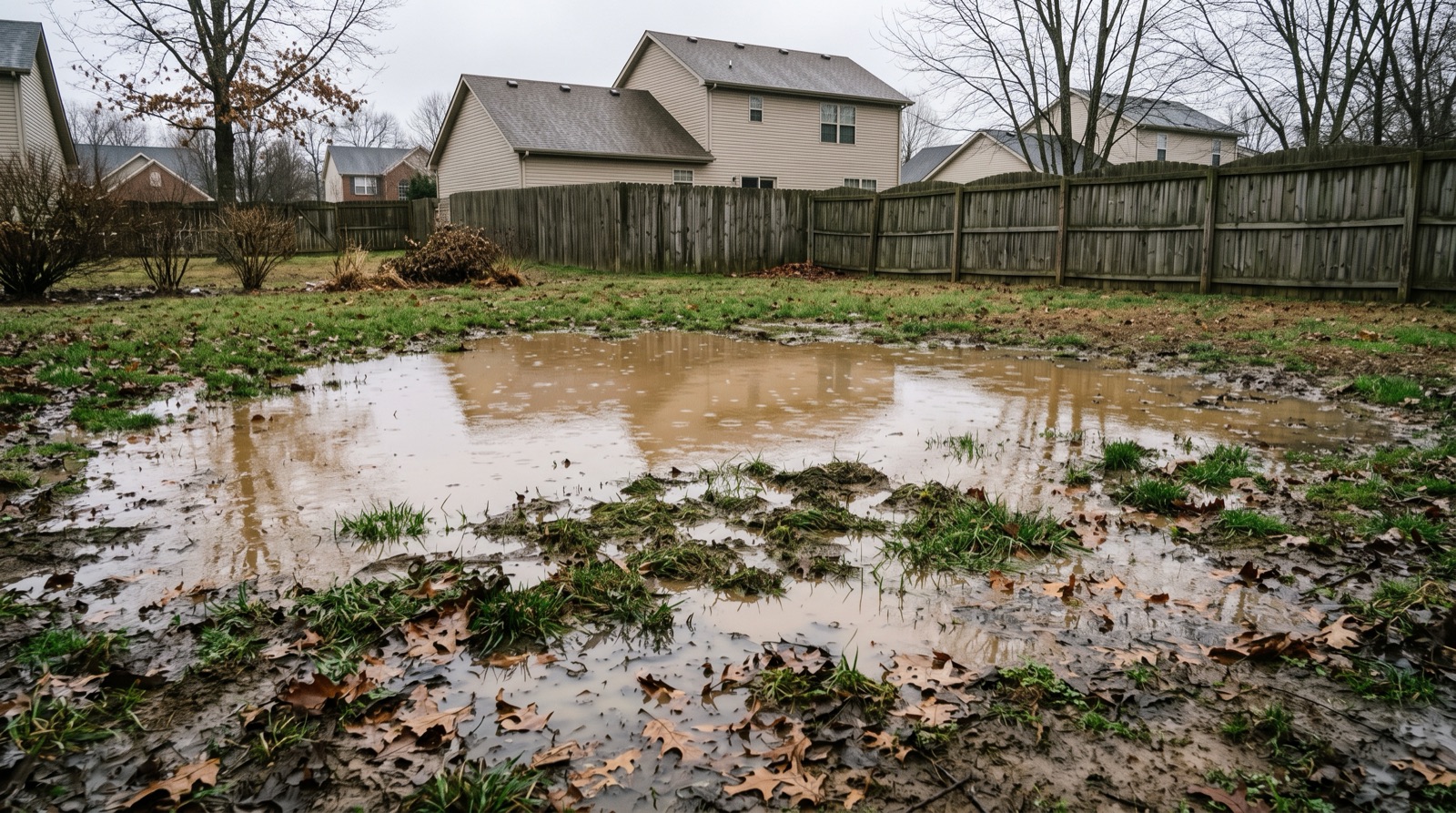
- Water stands in the same low spot for a day or more after rain
- A hillside above the house sends sheet flow toward the foundation
- The ground stays soft and spongy long after everything else has dried
- Water shows up against a wall or under the house with no obvious surface source
Services
French Drain Installation
A gravel trench and perforated pipe that intercepts water moving through the ground and carries it somewhere it can leave.
Yard Drainage & Regrading
Reshaping the ground so water leaves on the surface, which is often cheaper and longer lasting than burying pipe.
Downspout & Gutter Drainage
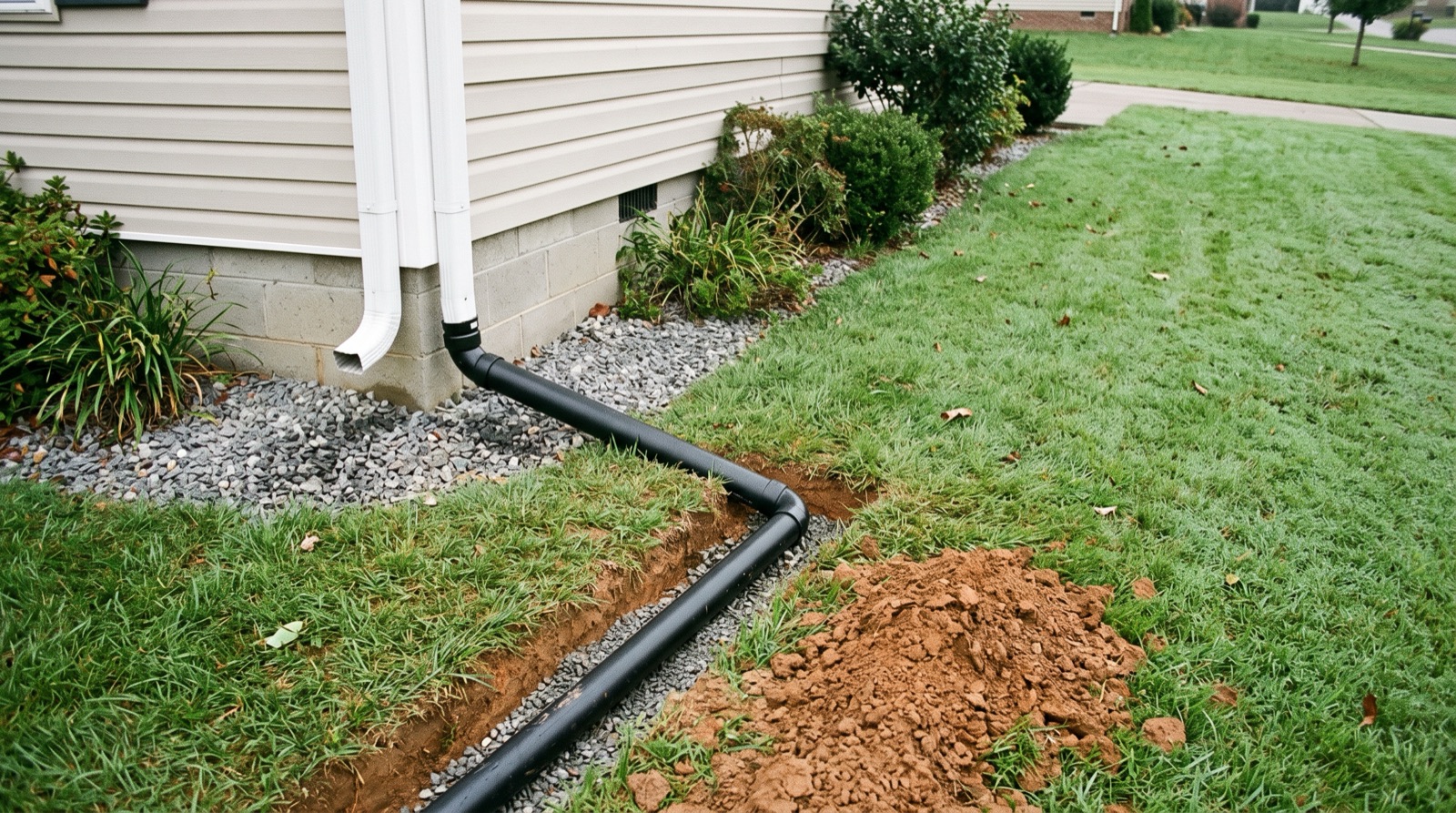
Carrying roof water away in buried solid pipe instead of dropping it at the corner of the house.
Catch Basins & Surface Drains
Grated inlets that take standing surface water off a low spot, a patio or a driveway and pipe it away.
Footing Drain Repair
Excavating to the base of the foundation to replace a perimeter drain that has silted up or collapsed.
Driveway Culverts & Ditch Work
Setting, replacing and clearing the pipe under a driveway entrance and the roadside ditch it belongs to.
Where we work
One county, covered properly. Maury County and the towns immediately around it.
How we approach the job
Columbia gets about 57 inches of rain a year
That is half again the national average, and it arrives in bursts. A yard that copes fine in an ordinary week can hold standing water for days after the kind of rain Middle Tennessee gets several times a season.
The problem is usually the grade, not the drain
Water moves because of slope. A pipe put in the wrong place moves nothing. Anyone who quotes a length of drain before walking the property in the rain, or at least reading where the water has already cut, is selling pipe rather than solving a problem.
Clay over limestone drains slowly
The Central Basin gives most properties here a clay subsoil sitting on limestone, sometimes with very little soil in between. Water that would soak away in sandier ground sits on top of the clay and runs sideways instead.
Where it goes matters as much as where it leaves
A drain that dumps onto a neighbor's ground, into a road ditch that cannot take it, or into a sinkhole is not a finished job. Discharge is the part of a drainage plan most often skipped, and the part most likely to cause an argument later.
Common questions
How deep should a french drain be?
Deep enough to sit below the water you are trying to catch, which usually means somewhere between eighteen inches and three feet. A drain laid a few inches under the sod intercepts almost nothing, and that is the most common reason a homeowner tells you french drains do not work.
How long does one last?
A properly built drain with washed stone and fabric can run for decades. One built with the wrong stone, or with fabric wrapped only around the pipe, can silt up within a few years. The difference is entirely in the build, not the product.
Can I put one in myself?
The digging is straightforward. The slope is not. A run needs consistent fall along its whole length, and getting that wrong by an inch over thirty feet is the difference between a drain and a buried trough. Rent a laser level if you are attempting it.
Get a quote on your yard
Call and tell us what is going on with your yard and where the property is. You will get a straight answer on what it actually needs, from a licensed contractor working Maury County.
Call (931) 350-6986